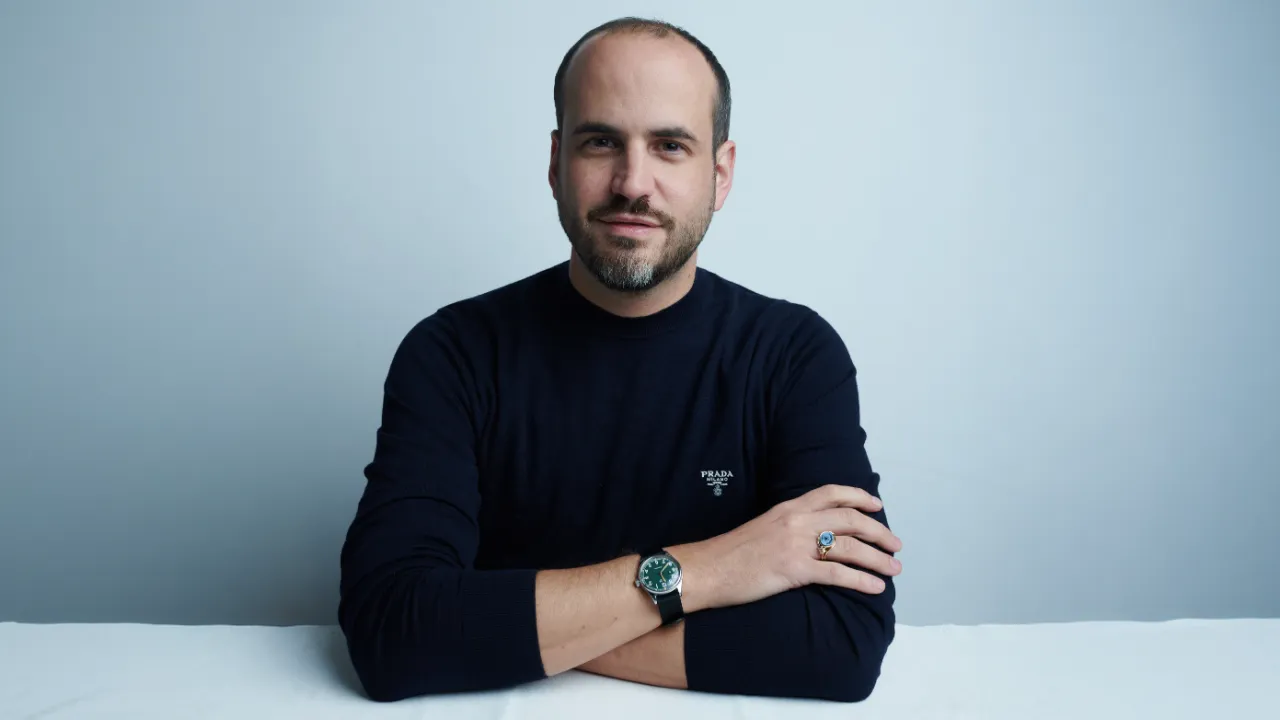
Producer Schuyler Weiss says international productions filming in Australia deliver benefits far beyond what’s visible on screen, helping build infrastructure, careers and long-term industry capability.
As Managing Director of Baz Luhrmann’s Bazmark and a producer on projects including Elvis and How to Make Gravy, Weiss has seen how global productions create opportunities, helping Australian crews build skills and sustainable careers.
“Those productions can become the catalyst of our industry.”
Producer Schuyler Weiss says international studios choosing to film in Australia boosts not just the economy, but the future of the Australian screen industry.
Weiss has a unique position of being a local Australian producer on indie films such as How to Make Gravy and as Managing Director of Baz Luhrmunn’s production company Bazmark, which actively looks at creating Hollywood-backed productions like Elvis and the upcoming Joan of Arc in Australia. Elvis filmed in Queensland and completed post-production work in several states, bringing international scale to an Australian film.
The Economic Impact
A lure of Australia is the three federal screen tax rebates – the Location Offset, Producer Offset and PDV Offset – which help finance the production, but have flow-on benefits to the wider local economy.
“There’s a vast expenditure that permeates really deeply into the local economy well beyond what’s visible on the screen.
Weiss continues: “Think about the number of hotel nights, meals and rental cars, and equipment you buy to build and paint the sets: things that have nothing to do with show business. It is the stimulus for potentially hundreds of millions of dollars to be injected into the economy in a much broader way than might be obvious.”
It’s actually been estimated that every dollar spent on federal screen incentives leads to between four and six dollars spent on the local economy, according to the Olsberg Report 2023.
But making overseas productions in Australia has another impact.
“Those productions can become the catalyst of our industry. They build infrastructure, build careers, build the crew base. So it becomes an investment in ourselves as well as in our industry.”
Propelling Careers Through Local and Global Projects
Weiss says Australian crews working on international projects are able to work at an enormous scale, learn from some of the most experienced heads of department in the world, and build a sustainable career in the process.
“If it seems like it’s two industries, the international industry and the domestic industry, that’s very much a narrow perception that’s only true for a very small number of people. For everyone else, we’re just making movies and TV shows in Australia, and being able to go back and forth between the two productions is what allows most people to have the careers they want and also to advance those careers.”
For Weiss, after Elvis he was able to produce independent film How to Make Gravy – Nick Waterman’s feature directorial debut, which is a film adaptation of Australian music legend Paul Kelly’s classic song. To bring the story to life, Weiss brought over a number of the same crew from Elvis such as hair and makeup designer Shane Thomas.
“You can imagine how fortunate a first-time filmmaker like Nick Waterman is to have somebody who is an elite international artist like Shane come and head up his department,” Weiss says.
Conversely, they also had Christina Validakis, who was a buyer on Elvis, step up into her first costume design opportunity on How to Make Gravy.
“She’s bringing all of the skills she’s learnt working on huge productions and under a costume designer like Catherine Martin, and then I’m confident putting her in her first head of department job.”
There are also the technical achievements finessed on studio films that crew can bring to small-budget features. To shoot the live music performances in How to Make Gravy, Weiss turned to some of the Elvis music department for help.
“We were able to execute [those performances] using the same quite sophisticated methodology for rehearsing and delivering music on screen that we did on Elvis,” he says.
Investing in the Future
Weiss has great confidence in Australia and its crew, but says to remain a competitive location means not becoming complacent.
“We have to stay really active in making sure that we renew and expand the infrastructure that we have… and create more opportunities for our domestic industry off the back of international post attraction.”
Bazmark is so committed to this, that they are part of the Miami Arts Depot (MAD), a creative industries precinct being created in Miami, Queensland, that will be the home for various tech, visual effects, gaming and screen businesses.
It was an idea sparked from doing post-production on Elvis, which Weiss says was the first film of that scale to do post-production on the Gold Coast.
“[MAD] is not just limited to PDV, but that’s where a lot of the technological innovation in the industry is and so we definitely see that as an important frontier,” he says.
“We want to find a way, a little more on the post side, to turbocharge infrastructure and crew base so that the Australian industry can benefit,” explains Weiss.
Weiss says the goal is to not finish a movie anywhere but in Australia, and indeed, 100% of the post for Baz Luhrmann’s new documentary EPiC: Elvis Presley in Concert was done locally, including the sound mix (which for Elvis was completed in California).
“We did the sound mix at Definition in Byron Bay and that was a fantastic experience,” Weiss imparts.
“It was really important to us, knowing that we have other big movies coming, to continue to do our work here in Australia, especially our post work.”