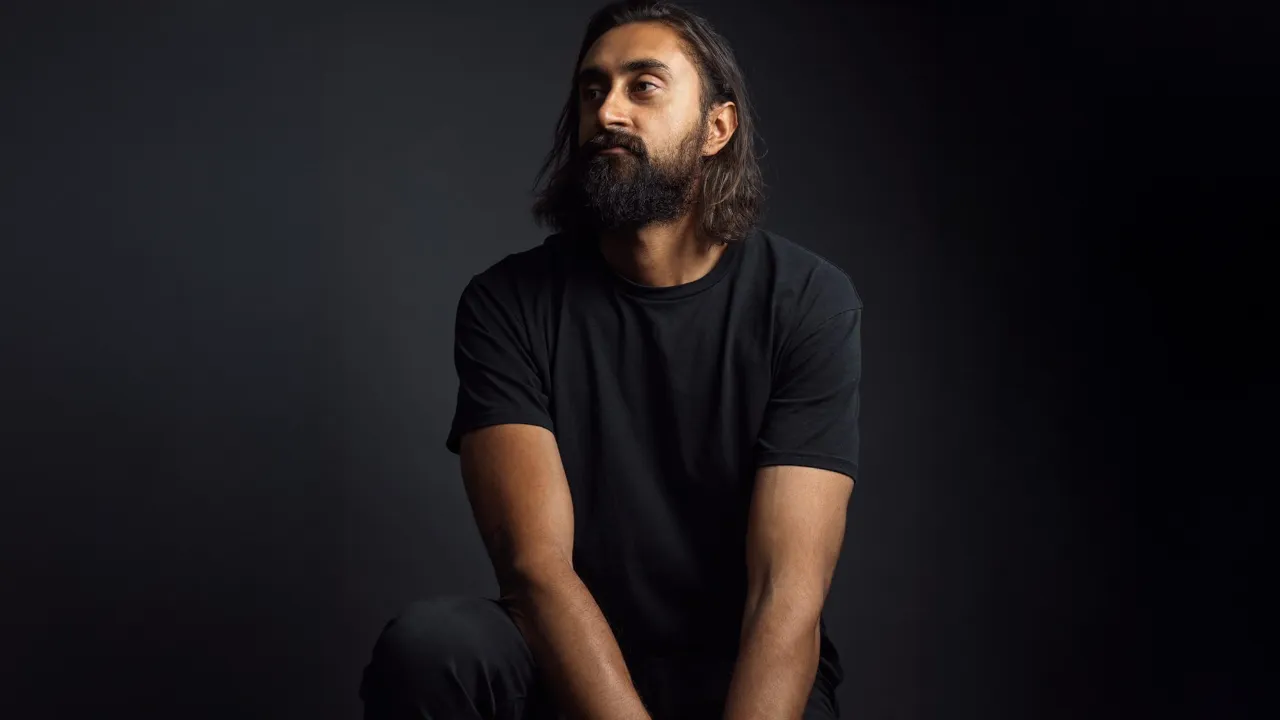
How Heartbreak High director Neil Sharma carved a career path by switching between international and local projects.
When director Neil Sharma steps onto a set, he not only brings his own style and instinct, but knowledge gathered from working as assistant director (AD) on some of the biggest international projects ever filmed in Australia.
It’s hard to list Sharma’s credits without feeling like you’re name-dropping a veritable who’s who of people and projects, from global studio-driven features Furiosa, The Fall Guy and Shang-Chi and the Legend of the Ten Rings, to local TV series such as The Secrets She Keeps from Lingo Pictures and Picnic at Hanging Rock from FremantleMedia Australia; and working as a director’s assistant with the likes of Taika Waititi and Jeffrey Walker.
Sharma started out as a runner and climbed the screen industry ladder, working as a 3rd AD for three years, and gaining the experience to move into 2nd AD and 1st AD work.
It meant that when Sharma started directing television himself – on Australian titles such as The Unlisted and Heartbreak High for Netflix, Critical Incident for STAN and Strife for BINGE – he had years of experience working on sets of every scale.
“It gives you more colours in the palette when painting as a director,” he says.
“I’ve gotten to stand behind the directors of all these shows, the HODs (heads of department), the actors, the techs, asked questions, and first hand experienced everything that’s been happening.”
Takeaways From Global Sets
Sharma says there have been takeaways from every project he’s brought into his directing arsenal.
Sharma recounts some of his recent on-set experiences:
“Shang-chi was the first Marvel film I did. They built a city out in Potts Hill (in NSW). Working on a film of that scale and production design was really eye opening. On Furiosa, I ran the VFX unit capturing the facial recognition technology. [So I saw the] processes doing that with facial scanning and seeing the live renders.”
“With Fall Guy, I’d done stunts all throughout my career, but seeing it on that scale with that level of technical expertise was incredible. You learn so much: not just the mechanics of how people are flung through the air and cars crashing, but the art of editing that and [story]boarding it. It’s an education you can only get in the room.”
Sharma says people in the industry are eager to pass on knowledge but his biggest education? “Working as Taika Waititi’s assistant on Thor: Love and Thunder.”
He says Waititi shared his directing process, as well as teaching him how the studio system worked in terms of financing, approvals, and how producers approach edits, story and the finished product.
Opportunities on Studio Projects Only Set to Grow
With up to 2,500 people employed on a studio film like Thor: Love and Thunder, Sharma is just one of many creatives to benefit from our diverse Australian screen ecosystem. Furiosa, for example, was shot over eight months, and employed more than 3,000 people.
One of those was Jacinta Leong, a veteran art director who’s also worked on films such as Alien: Covenant and Shang-Chi, and taken on production designer roles on Australian feature 2067 as well as Fall 2, which is directed by Australians Peter and Michael Spierig and has significant other Aussie influence.
Meanwhile, in recent years Damian Wyvill ACS has worked as a camera operator on global features Peter Rabbit 2: The Runaway and Alien: Covenant and as a Director of Photography on big-budget international series La Brea and The Artful Dodger, and on local shows RFDS, Critical Incident, and Return to Paradise.
Opportunities on those international projects are only growing, thanks to the Federal Government’s increased Location Offset offering a 30% tax rebate for large-budget film and television projects shot in Australia.
Driven by this reformed Location Offset, a record $1 billion of spend from 20 international features filming in Australia was recorded in 2024/25, according to Screen Australia’s annual Drama Report. Meanwhile international TV and video-on-demand (VOD) productions generated an impressive $458 million in expenditure.
The Flow-On Effect for Aussie Crews
Sharma says you can see the ripple effect of working on global projects on local crews:
“From Heartbreak High to Critical Incident to Strife, the level of product we’re making is [because] lots of crew are working on that big scale. A grip is bringing the gadgets from these big productions to Australian shows.”
Australian series have not lost what makes them inherently Australian, but are consistently levelling up in quality to better compete with international series.
“We’re making Australian stories for global frontiers,” Sharma says. “Internationally, they need to stand on their own, technically and creatively. Heartbreak High is a great example of that: it hit explosively overseas, but when making it we wanted to make sure it hit the local references. It’s a very local Australian story.”
It’s also about creating a sustainable career – and industry. The combination of international work and smaller Australian projects ensures crew are employed, rather than waiting for the next local production and competing for limited roles.
“We’re all freelancers [and] the bigger shows go on for a while, but having smaller local jobs keeps the industry going as well,” Sharma says.
“You’ll see technicians working on bigger things do Aussie projects in between. It’s really important, for training and also just staying employed.”
International productions complement Aussie projects to sustain the screen ecosystem. They not only employ crews, but fund training, create investment opportunities and build local capabilities. Those crews take that knowledge to their next project, but also make the Australian screen industry more in-demand than ever.
That demand – and the opportunities it generates – is not about to slow down either. Combine the record high of international expenditure in 2024/25 and the continued 30% Location Offset bringing more big-budget projects to Australia, and the future already looks promising for the next cohort of screen practitioners like Sharma, whose careers are going from strength to strength.