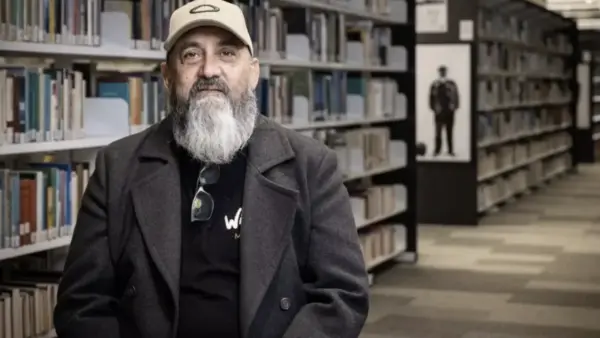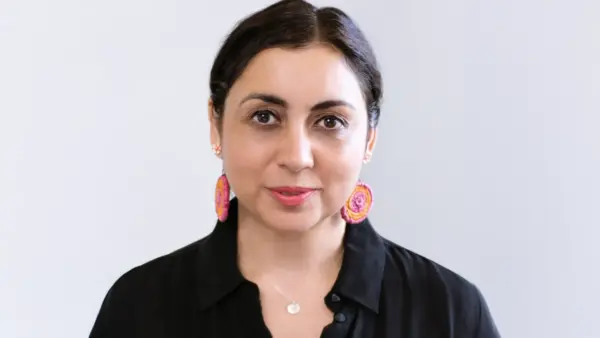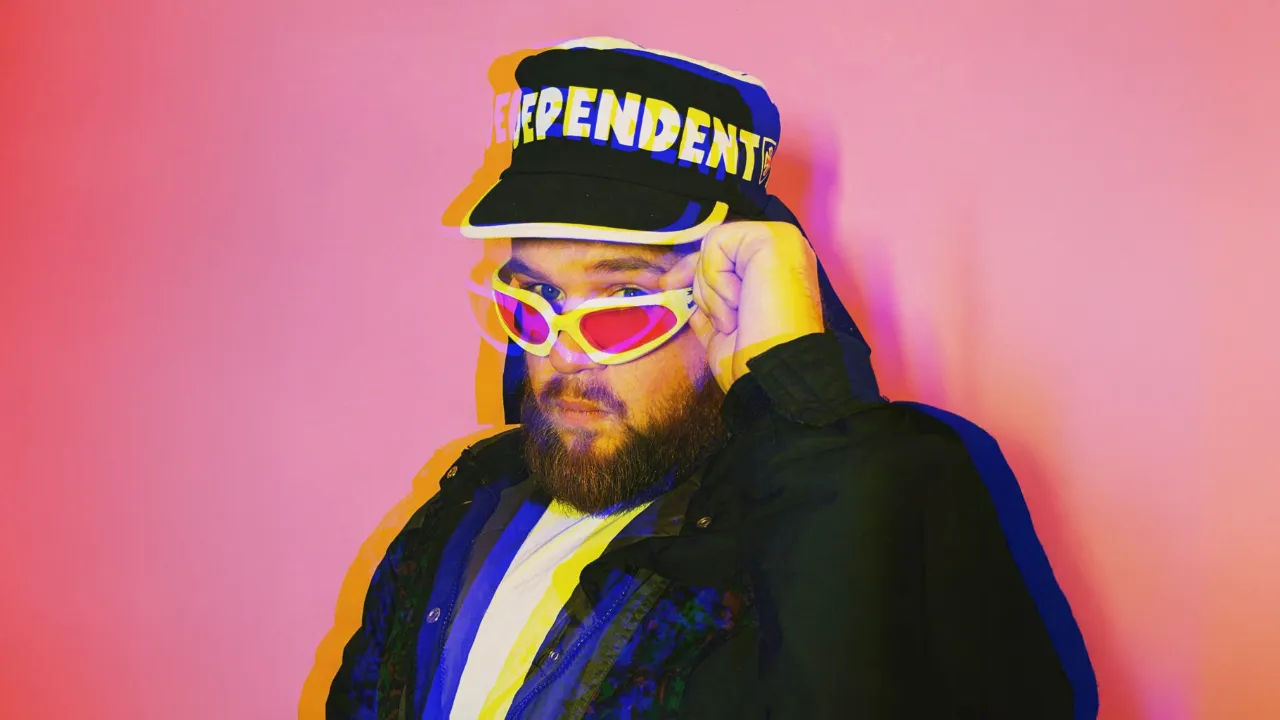
Screen Tasmania recently sat down with Rob Braslin, a First Nations creative who has a deep connection to the island of lutruwita/Tasmania and its creative possibilities. An award-winning writer, actor and comedian; above all, Braslin is a storyteller. Wearing many hats, he skilfully shifts between writing for the stage and screen, stand-up performance, and work in front of the camera.
Having recently finished a writing gig for ABC’s comedy panel show Tonight at the Museum, which filmed at the Tasmanian Museum and Art Gallery, Rob is now working with a local team on a feature film that he hopes to share with audiences far and wide.
You are a bit of a creative ‘slashie’. How would you describe your work?
I usually just say I’m a storyteller first. The ‘slashie’ thing comes from working across a few different forms; writing for stage and screen, acting, and getting involved in community-based projects. It all started with stand-up comedy, but for me it all kind of feeds into the same thing, which is telling stories that feel honest and connected to where I come from.

What are you currently working on?
I’ve got a few things on the go at the moment. I’m making a video called The Hidden Art of nipaluna, which is a sequel to a video I wrote and directed called The Hidden Art of Glenorchy, a project I made with Moonah Arts Centre during the COVID lockdowns. Alongside that, I’m chipping away at some bigger projects.
At the same time, I’m making a very real community artwork where I pull bits of metal out of the Derwent River, using a magnet on a rope and turn them into pieces that tell the contemporary stories of the place I live.
How was your experience working as a writer on the new ABC series Tonight at the Museum?
It was a really great experience. Being in a writers’ room like that is always a bit of a balance between bringing your own voice and building something as a group. It was actually my first time working in a writers’ room for a panel show, so I learned a lot just from being around other writers and seeing how ideas grow from a small spark into something that ends up on screen.

I especially loved the research side of it – going out to the Tasmanian Museum and Art Gallery storage facility and hearing more stories about palawa history. My family’s mob are Wakka Wakka, but I’ve lived in Tassie my whole life and mostly been around palawa, so getting a deeper understanding of the culture in this place was special.
You co-wrote the award-winning play The Box with palawa playwright Nathan Maynard. How does the process of writing for the stage differ from writing for screen?
The biggest difference for me is the immediacy of theatre. Everything is alive in the moment; you’re writing for actors and an audience sharing the same space, breathing the same air. Screen work can feel more fragmented and technical, with the camera carrying a lot of the storytelling.
Working with Nathan on The Box was genuinely collaborative, and theatre naturally encourages that in a different way. We went through a couple of development stages where actors were brought in early, working closely with Nathan and me to find each character’s voice and to shape the energy and intention behind the final words that made it into the play.
You were also a supporting cast member in Bay of Fires season 2. What was it like to be on set?
Being on set as an actor is always a bit of a reset for me. It’s a different pace and a different mindset compared to writing. You’re stepping into someone else’s vision and doing your best to serve the story in that way. The crew and cast were really solid, so it felt like a great environment to learn and just focus on the work.

I also had a hard time not laughing during rehearsals with my co-star Katie Robertson. She’s incredibly funny, and there were a few lines where I was laughing through them when I definitely shouldn’t have been. Thankfully, once we were rolling, it was all fine. It really sinks in that the crew has been there since the early hours, and the last thing you want to do is waste time by corpsing.
Queenstown was also really lovely, even with the rain. The locals were a great bunch, and their favourite drink is something called a ‘snakebite’, which is beer with sarsaparilla in it. Good stuff.

You recently worked on waynapuni pools, a public artwork created by artist Benjamin Paul in conjunction with Aboriginal youth from Montrose Bay High and Karadi Aboriginal Corporation. Can you tell us about that experience?
That was a really meaningful project to be part of. It was less about a finished ‘product’ and more about the process; working alongside young people, hearing their perspectives, and contributing to something that’s grounded in community. Projects like that remind me why I do any of this in the first place. Ben Paul is a creative man, and the kids were inspiring. They made old cars into working hot tubs and saunas. I couldn’t believe it. I was helping make some funny, weird videos for social media.

What has been a highlight of your career?
It’s hard to point to just one thing. Finishing The Box and seeing it connect with audiences was definitely a big moment. Another highlight was making a short film in 2018 called Vale Light, which was set in my home suburb of Clarendon Vale. It was made through ABC Indigenous and Screen Australia’s First Nations Department, and was part of an anthology series called Dark Place.
I think both of those projects stand out because they’re set in housing and reflect worlds that don’t always get shown on screen or stage. But honestly, a lot of the highlights have been the quieter moments, too – collaborations that just felt right, or projects where the process itself really meant something.
What are you planning to do next?
Next, I’m putting everything into making a feature film with my fellow local filmmaker and mate, Alex Laird. We’ve been chipping away at a script called LAN Party, set in the very early 2000s in nipaluna (Hobart). I’m really passionate about telling stories set in Tassie, and this one feels like a love letter to our youth.

At the moment, I’m in full build mode for LAN Party. I’m bouncing between writing, pulling together ideas for casting, hunting down props on Facebook Marketplace, and thinking through how we actually get a film like this seen. It’s exciting working out how to cut through the current landscape, and the dream is to not only make the film, but to take it on the road and travel with it to screenings wherever we can.
We’ve also got an incredible crew down here who work their guts out to make things happen, and we want LAN Party to be part of the current wave that’s showing our tiny island has stories worth telling, and people anywhere in the world can connect with them.
Across writing, performance and community projects, Rob Braslin’s work is grounded in a clear throughline: storytelling that is honest, place-based and collaborative. Whether developing scripts, performing on set, or working alongside young people on local creative projects, his approach reflects a commitment to stories that feel connected to community and lived experience.
That same ethos carries into his next chapter, with projects like LAN Party continuing to centre lutruwita/Tasmania as both setting and inspiration. In a landscape where audiences are increasingly seeking authenticity, Braslin’s work speaks to the power of local stories to travel – demonstrating that even from a small island, there are voices, perspectives and experiences that resonate far beyond it.
Learn more about partnering with talented Tasmanian filmmakers like Rob.
Contact Alex Sangston from Screen Tasmania.