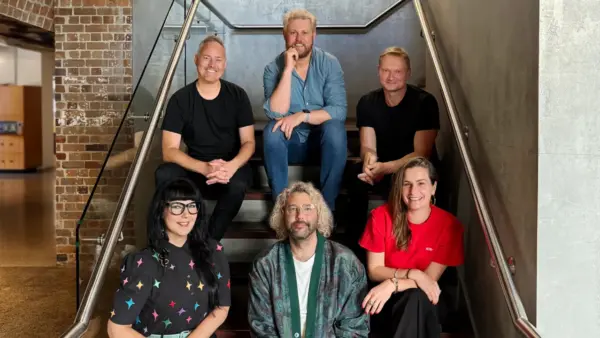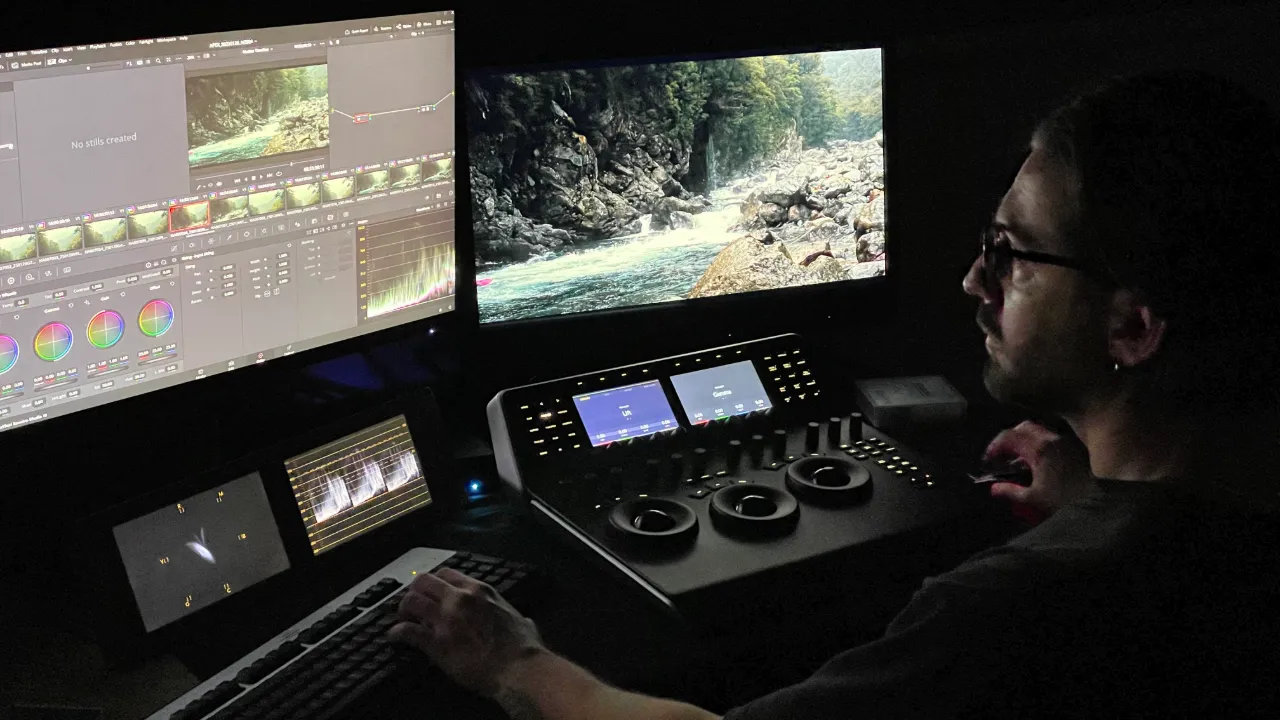
The work of a dailies team is rarely seen on screen, but on a production the scale of Netflix’s Apex, it becomes one of the most critical links in the filmmaking chain. From colour management and metadata workflows to international collaboration and overnight deliveries, The Post Lounge (TPL) played a pivotal role in ensuring footage captured across New South Wales arrived in editorial as a consistent and cohesive whole.
TPL’s strategic partnership with global post powerhouse Company 3 – a collaboration that began as a method of servicing the increasing number of international productions choosing Australia as a filming hub – brought both teams together on the Netflix production, pairing TPL’s local dailies and post-production expertise with Company 3’s global finishing pipeline.
Head of Dailies Liam Donaghy, explained that TPL’s relationship with Company 3 meant that they began work on Apex even prior to production commencing. This involved facilitating a series of LUT creation sessions between Director of Photography Lawrence Sher in Sydney and Company 3’s finishing colourist Jill Bogdanowicz in Los Angeles. Working collaboratively across continents, the team established the film’s “Show LUT” (Look-Up Table) before cameras rolled – a look that would become the basis for everything moving forward.
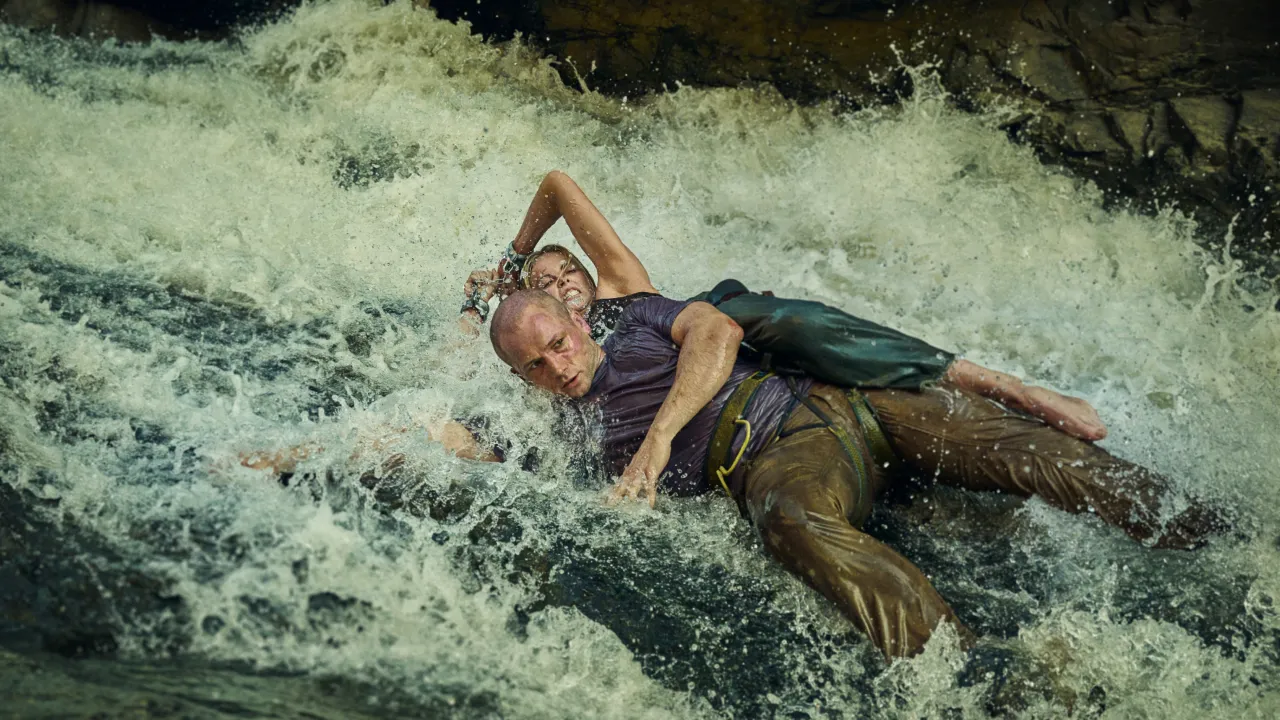
For Donaghy, one of the most memorable aspects of the experience was Sher’s enthusiasm for a part of filmmaking that rarely receives much attention.
“It was so refreshing how passionate [Sher] was about dailies because dailies aren’t always considered the most exciting part of filmmaking. It’s a very niche part of the process, and an important part of the process, but not particularly glamorous.”
Liam Donaghy, Head of Dailies, The Post Lounge
Once production commenced on the Netflix feature, TPL shifted into a round-the-clock operation, processing footage overnight while crews continued filming during the day. With offices in New South Wales, Queensland and Victoria, the company could draw on resources across multiple states, guaranteeing support regardless of when team members were required.
The team often found themselves working around production schedules rather than traditional business hours – as is often the case when working with dailies. Depending on the needs of the shoot, that could mean supporting day units, night units, or multiple crews simultaneously while ensuring dailies reached executives and editorial teams overseas before the start of their working day.
“We engineer our teams to wrap around production. If the production is shooting dayside, then we work at night. If they are shooting at night, then we work in the day… We have to be flexible to facilitate the required turnaround.”
Liam Donaghy, Head of Dailies, The Post Lounge
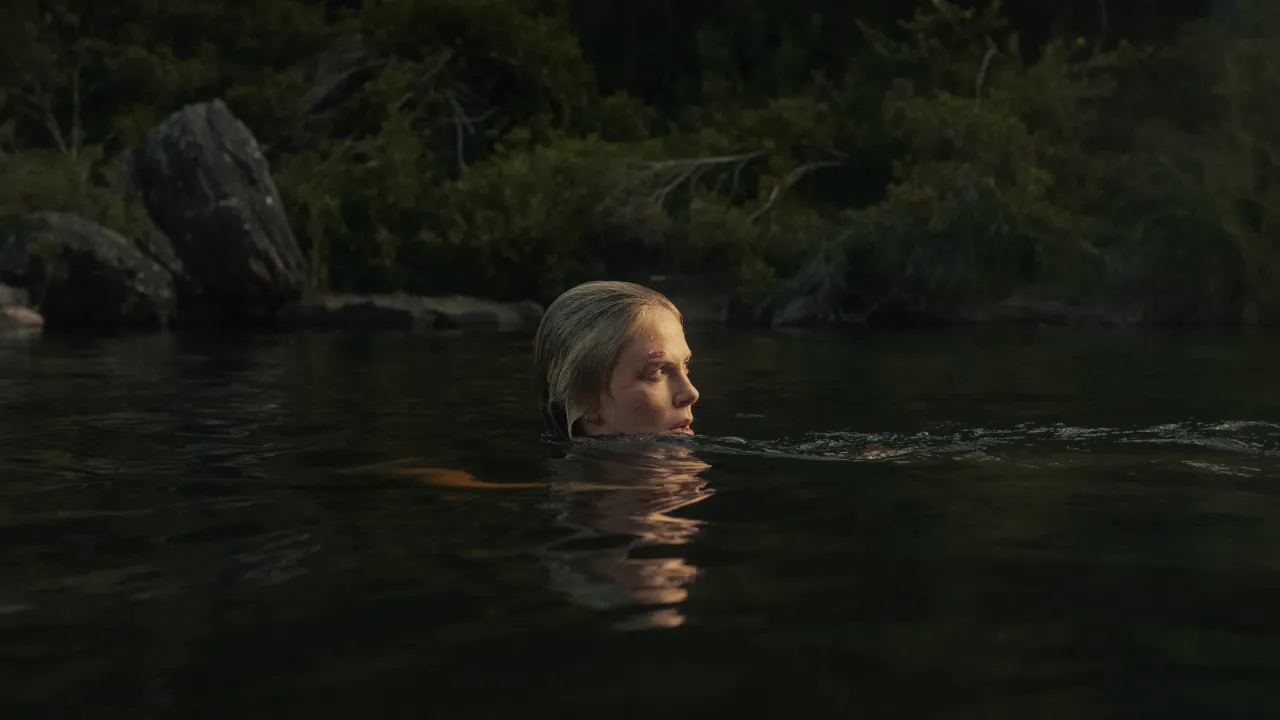
A significant part of TPL’s work on Apex involved managing the enormous volume of metadata generated by the production. Information from multiple camera systems, lenses, colour pipelines, audio sync workflows and on-set reports had to be consolidated into a format that could be easily searched and utilised by editorial and visual effects teams.
The team developed custom workflows that merged colour, framing, scene, take, sync and camera metadata before mapping the information into searchable ALE files for VFX vendors. The challenge was compounded by the fact that each camera system generated metadata differently.
“Because there are hundreds of columns of metadata, and because different cameras have different metadata – even different lenses will pass on different metadata – we had to invent a way to funnel these different values into columns that were searchable.”
Liam Donaghy, Head of Dailies, The Post Lounge
Donaghy continues: “While it wasn’t a VFX heavy film, per se, it still became a mission to [collate the metadata]. It took lots of work to get the right amount of data to the VFX vendors.”
The complexity increased further because Sher regularly used vintage lenses that provided little or no metadata. To compensate, information such as focal length, white balance and ISO was manually recorded on set before being integrated into the wider workflow.
The sheer variety of formats also required additional problem-solving.
“We had so many different formats of cameras that we had to come up with a separate coding system in order to label them. We ended up having to work with 26 different camera formats.”
Liam Donaghy, Head of Dailies, The Post Lounge
The challenge wasn’t simply organising those formats, but identifying exactly what was arriving through the pipeline on any given day.
“Larry might shoot in eight different formats on any given day, then it’s up to us to play the role of a detective, investigating and identifying the kinds of material that arrives at our door.”
Liam Donaghy, Head of Dailies, The Post Lounge
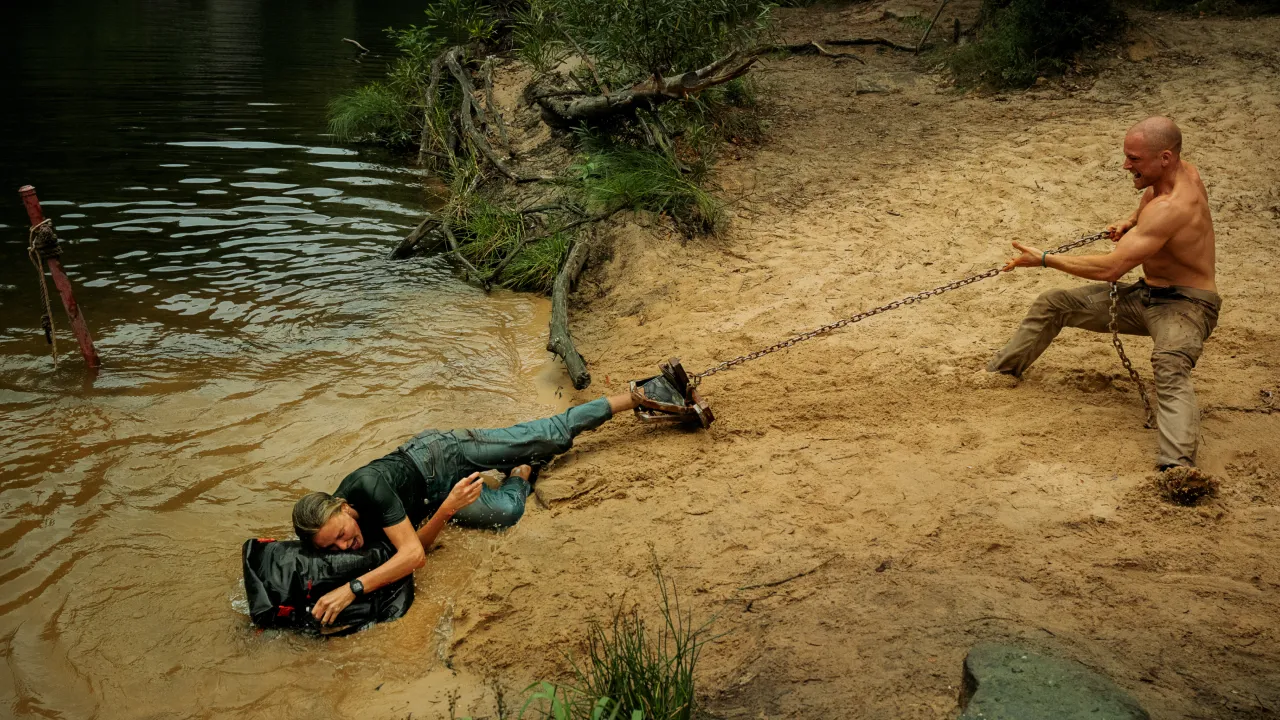
Working across the Blue Mountains introduced a different set of challenges. Rather than operating from controlled studio environments, crews were often positioned in remote locations where moving equipment, processing footage and maintaining reliable connectivity became significantly more difficult.
“You would imagine a DIT [Digital Imaging Technician] being on a stage with his monitors and on comms and making tweaks to the colour on the run… On Apex, [our DIT] was in a wetsuit, hauling gear through rivers, and setting up digital carts on the sides of cliffs.”
Liam Donaghy, Head of Dailies, The Post Lounge
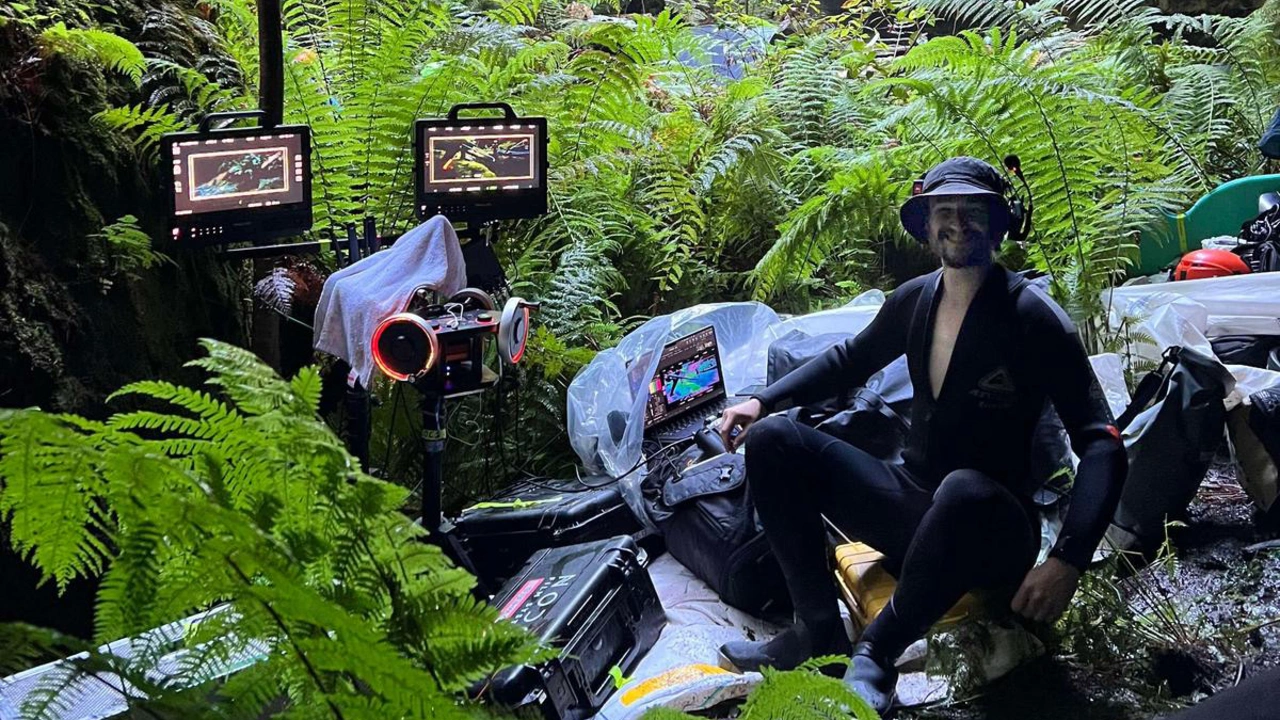
Despite the rugged conditions, the objective remained unchanged: ensuring footage could move efficiently through the pipeline and reach the people who needed to see it.
“When a production is shooting in a remote – albeit beautiful – location, we typically set up shop as close as we can to the action, but somewhere we will have reliable power and reliable internet,” Donaghy explains.
Despite the complexity of the workflows, Donaghy says many of the team’s biggest challenges came down to consistency. Every shot had to match, regardless of changing weather conditions, cloud cover, shadows, cameras or lenses. It’s “invisible” work, but it’s nonetheless key to the completed film.
“Our biggest challenges relate to aspects of the film that audiences would never even consider. Grading, exposure, light. We allow for the production to cut between takes without issue… Essentially, it’s about managing the sheer quantity of data and footage, and creating consistency. How everything comes together is very much our prerogative.”
Liam Donaghy, Head of Dailies, The Post Lounge
The project also reinforced the importance of flexibility.
“We have good people, skilled people, that are available around the clock that you can rely on to jump in at the drop of a hat.”
Liam Donaghy, Head of Dailies, The Post Lounge
This team extends as far as the United Kingdom and the United States, thanks to the partnership between The Post Lounge and Company 3.
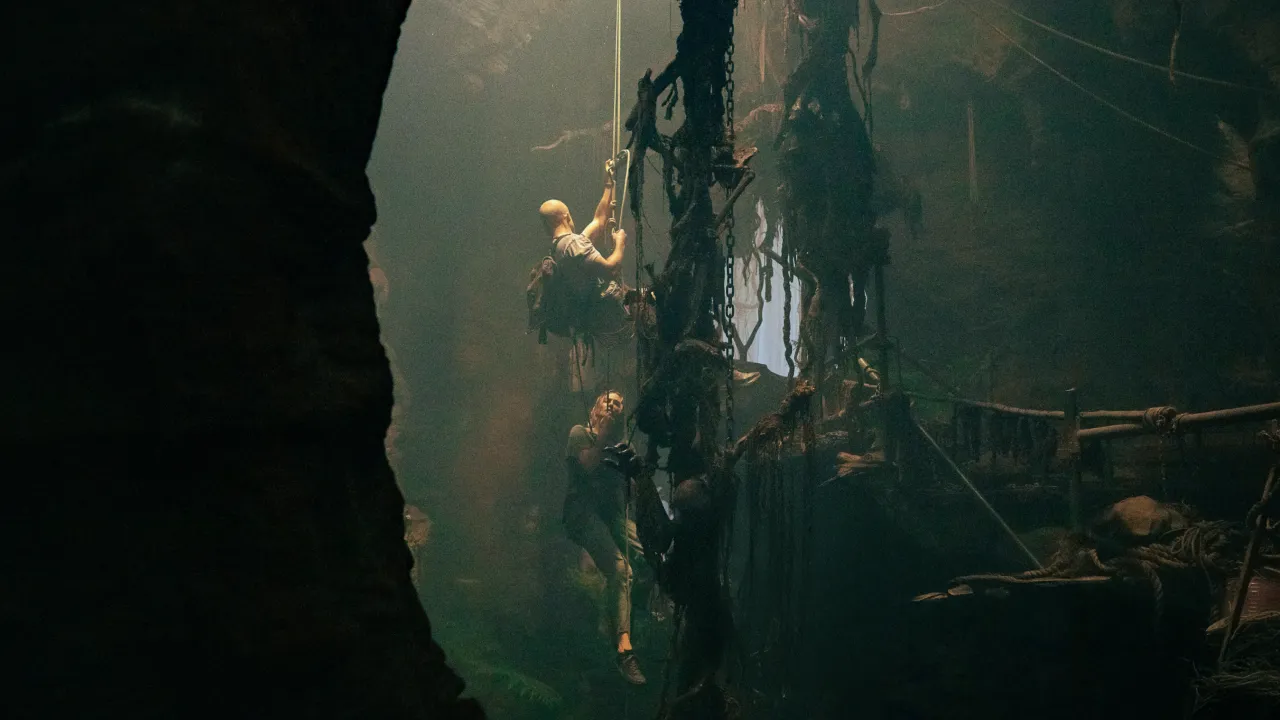
Although Apex was produced as a direct-to-streaming Netflix original, Donaghy says the philosophy behind the workflow remains unchanged. Whether destined for theatrical exhibition or not, productions are still created to the highest possible standard from the outset.
“We make films to be viewed in a theatre. We grade it in the theatre. It’s mixed in a theatre… We assume that people will be watching the film on something huge,” Donaghy explains.
In Donaghy’s eyes, Australia’s post-production sector continues to prove its ability to support large-scale international productions at the highest level.
“The beauty is that we have all worked on large-scale productions… We have worked in these environments many times. The quality of post-production in Australia and the abilities of the people involved are very, very fortified. We can work at the highest levels.”
Liam Donaghy, Head of Dailies, The Post Lounge
With specialist talent, established workflows and the infrastructure to collaborate globally in real time, he believes Australian facilities are increasingly operating at the forefront of modern post-production. Working on a production of this scale for Netflix serves as a reminder of Australia’s abilities to service the most complex international projects.
“It’s an incredible time to be working in Australia. The sky’s the limit.”
Liam Donaghy, Head of Dailies, The Post Lounge